Monitor
Advise
Influence
argon.africa

Once seen as a peaceful buffer between Nigeria’s violent northwest and its political centre, Nigeria’s North Central is fast becoming the latest flashpoint in the country’s deepening insecurity. Take Kwara State, once known for its relative peace and tranquility, has been grappling with rising insecurity and deteriorating peace in recent times. The state is facing challenges that threaten its stability and prosperity, affecting the lives of its citizens.The sharp rise in kidnapping, rural banditry, and targeted killings especially in border communities points to the emergence of a dangerous new insurgency corridor, the Kebbi Kainji-Borgu Triangle.
This loosely governed tri-border zone stretching across Kwara, Kebbi, and Niger States in Nigeria, Borgu Department in Benin, and south-western Niger Republic is quickly evolving into a key transit and operational hub for both local bandits and Sahelian jihadist groups. Once off the radar of national security discussions, the Kebbi-Kainji–Borgu Triangle now demands urgent attention as a strategic threat zone.
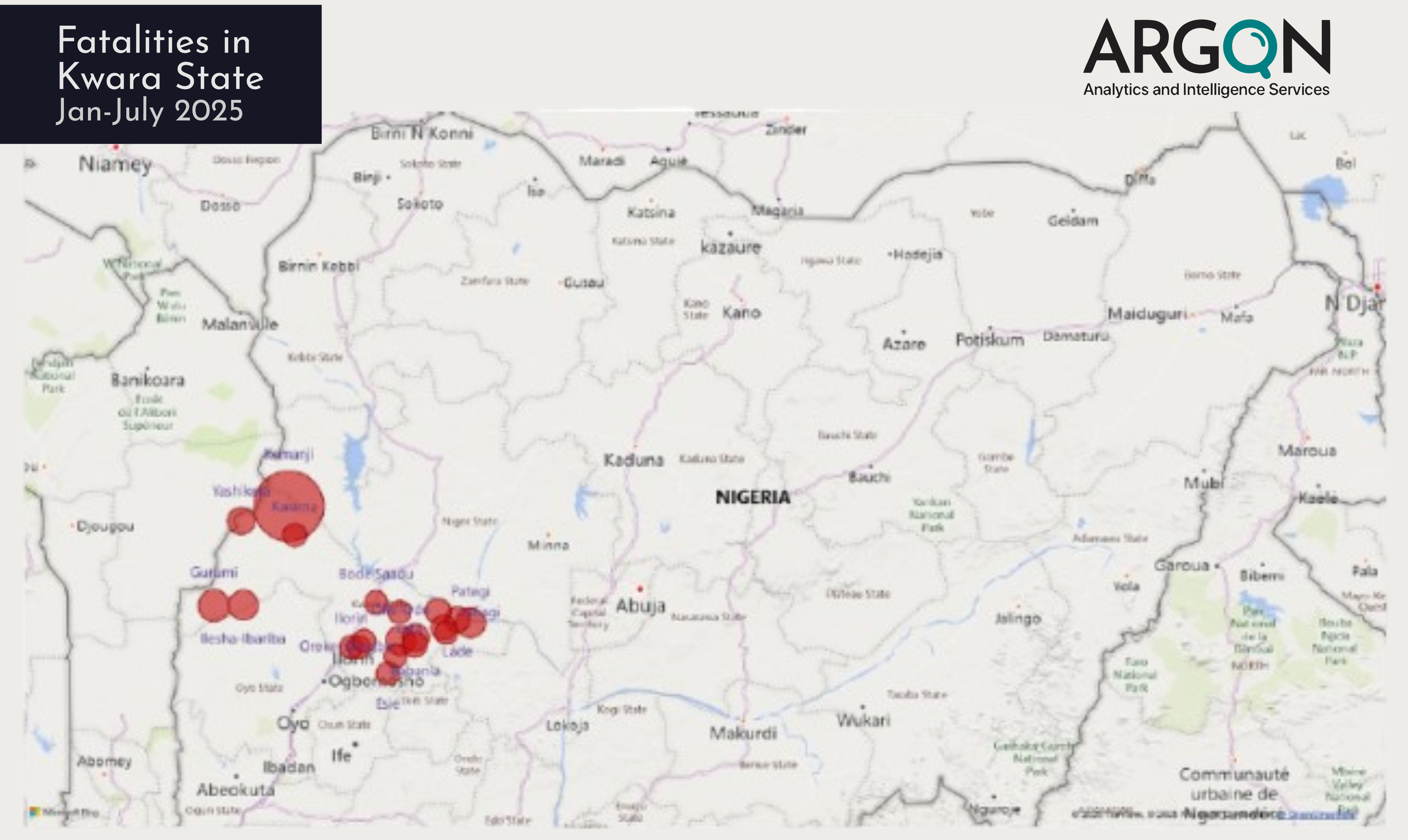
N:B Fatalities in Kwara State Jan - July 2025
Argon Africa’s open-source monitoring shows a clear escalation in violence since April 2025. In Edu, Kaiama, and Baruten LGAs in northern Kwara, armed groups have staged increasingly brazen attacks, travelers abducted on highways, local officials kidnapped, and vigilantes killed during confrontations with heavily armed assailants. On June 30, a firefight left five vigilantes and one police officer dead. In mid-July, armed groups linked to the Islamic State attacked a construction site in Niger’s Dosso region, near the border with Nigeria, killing two Indian nationals and abducting another. Similarly, northern Benin’s Borgu department has experienced a surge in violence, including a JNIM-led attack in April that claimed the lives of more than 50 Beninese soldiers. These incidents highlight a growing pattern of insecurity along border areas, underscoring the emerging threats across these transnational corridors.
At the centre of these patterns is Kainji Lake National Park— a vast and under-secured forest reserve now serving as a safe haven for non-state armed actors. But this menace is more than localized criminality. Intelligence reports and recent propaganda by Jama’at Nasr al-Islam wal Muslimin (JNIM) suggest a deliberate southward expansion strategy. Under pressure in Mali and Burkina Faso, extremist factions are pushing into northern Benin and southwestern Niger, using forest corridors and weak border controls to enter Nigeria through Kwara and Kebbi.
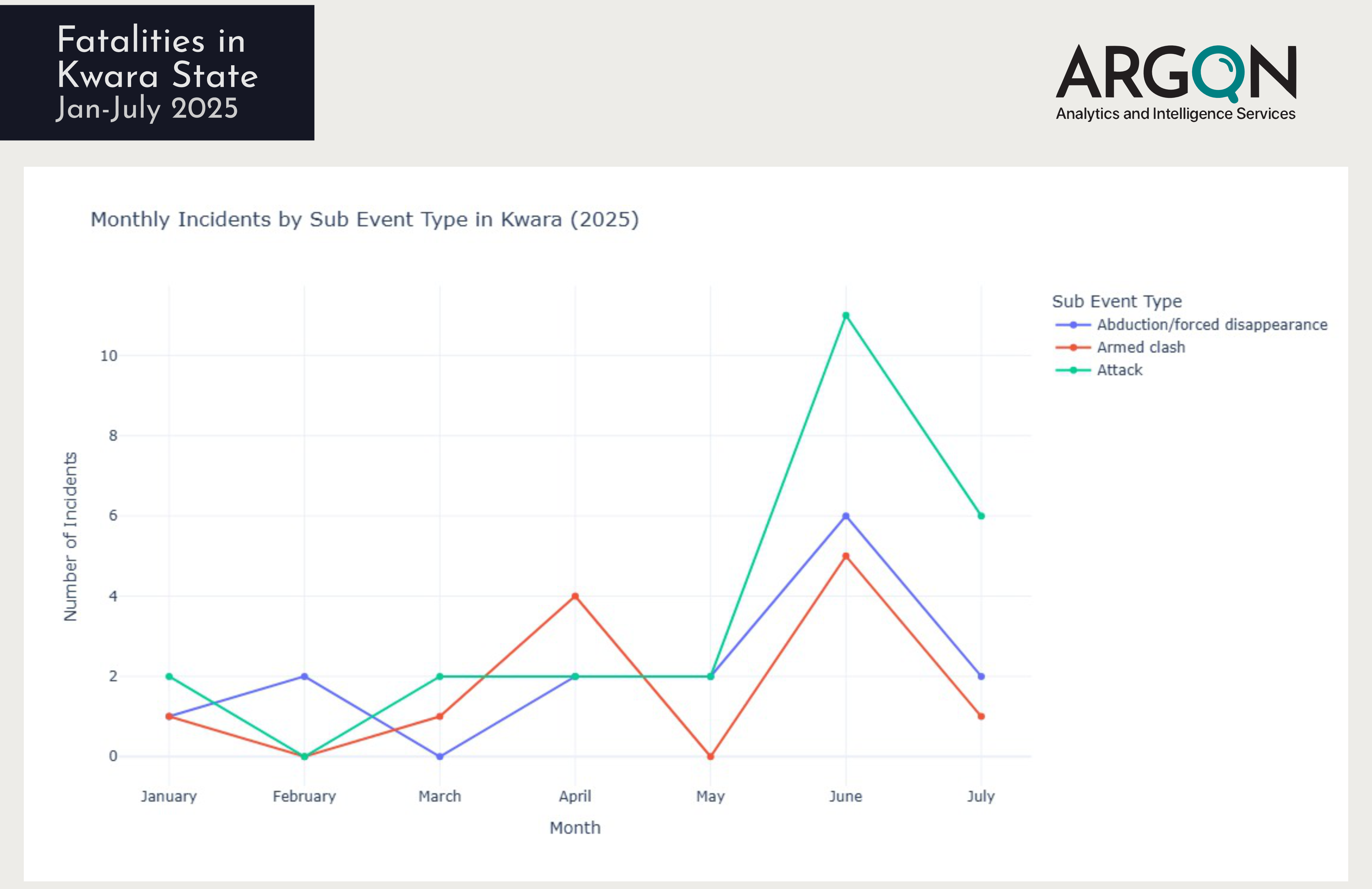
The Kebbi-Kainji–Borgu Triangle provides the perfect terrain, sparsely populated, economically marginalized, and largely ignored in national counter-terrorism planning.
Strategic imperative and Argon's Way Forward:
The implications are profound. First, Kwara’s destabilisation exposes the North Central region, including Abuja, and potentially the South-West, including Lagos, to greater risk. This could shift the geography of insurgency deeper into Nigeria’s political heartland. Second, the transformation of Kainji park from a biodiversity asset to an armed sanctuary mirrors patterns seen in W and Pendjari National Parks, where Sahelian insurgents have already entrenched. Finally, the Kebbi-Kainji–Borgu corridor may enable a new Sahelian infiltration route, opening a western flank in Nigeria’s fight against violent extremism.
In the short term, more attacks and abductions are likely. In the medium term, alliances between local bandits and ideological jihadist groups may harden, increasing the threat of hybrid insurgency.
Without strategic intervention, this corridor could become a permanent base for regional insurgents. On a bilateral front, Nigeria and Benin must act fast. Joint forest patrols, better inter-state intelligence coordination, and strong community engagement must be enhanced. On a regional scale, ECOWAS must recognize the Kebbi-Kainji–Borgu Triangle as a regional threat, drawing in the AES state, particularly Niger and Burkina-Faso,for sustained and coordinated action that strengthens security cooperation without loosening the Northern front. While international partners must invest beyond Nigeria’s northeast, supporting efforts to secure forests, reinforce borders, and address rural fragility, across the North-West and the North-Central. The Kebbi, Kianji–Borgu Triangle is not yet a household term but unless urgent action is taken, it will be.
Similar Insights:
Loading similar insights...